22-year history of ‘crossfire’: Police linked to 46% of 2,957 deaths
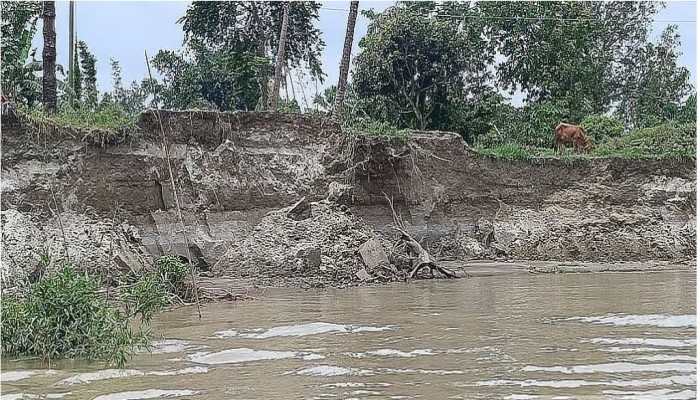
 Symbolic Image
ASK data show police accounted for 1,371 deaths and RAB for 1,200 between 2004 and Sept 2026
Staff Reporter
A total of 2,957 people were killed in alleged “crossfire” incidents or gunfights involving law enforcement agencies between 2004 and September 2026, with police accounting for around 46 per cent of the deaths, according to data from rights organisation Ain o Salish Kendra (ASK).
Of the total, 1,371 people were killed in incidents involving police, while 1,200 were killed in incidents involving the Rapid Action Battalion (RAB), now known as the Special Response Battalion (SRB). Another 69 people were killed in alleged gunfights involving joint operations by RAB and police during the period.
The figures have drawn renewed attention following Inspector General of Police (IGP) Md Ali Hossain Fakir’s recent remarks that police would not hesitate to carry out “crossfire” if necessary and if the government permitted it.
Speaking at the formal inauguration of the “Community Islamic Bank System” in Dhaka’s Chawkbazar on Monday (October 26), the IGP said law enforcement agencies should not be blamed for everything.
“Who will come, when they will come, what will happen—those are not matters for law enforcement agencies to deal with. Our responsibility is to act wherever and whenever necessary in accordance with the law and the Constitution. If crossfire is needed and the government allows it, we will do it,” he said.
His remarks drew criticism from human rights activists and lawyers, who said anyone accused of a crime must be dealt with under the law and that there is no legal basis for extrajudicial killings, even if the government were to authorise them.
No police or RAB deaths recorded after 2024
Year-wise statistics published in ASK’s annual reports show no recorded deaths in alleged crossfire incidents or gunfights involving police or RAB after 2024.
However, such deaths involving other agencies were reported during the period. One person was killed in an incident involving Border Guard Bangladesh (BGB) in 2024, another in a gunfight involving the Coast Guard in 2025, and a third during an operation by the Department of Narcotics Control up to September 2026.
Human rights activists and lawyers have long questioned the circumstances surrounding such incidents, alleging that many cases described by law enforcement agencies as gunfights were, in fact, extrajudicial killings.
Rights activist, lawyer criticise IGP’s remarks
Human rights activist Nur Khan Liton described the IGP’s remarks as contrary to the Constitution and the law. He said a person holding the highest position in the police should be held accountable for making such statements.
Nur Khan alleged that, in many crossfire cases in Bangladesh, people were taken into custody and subsequently killed, with their deaths later portrayed as the result of gunfights.
He said that if the IGP genuinely supported such practices, he should not remain in office. He also warned that the remarks could place the government in an embarrassing and potentially dangerous position.
Supreme Court lawyer Advocate Manzill Murshid said many incidents previously described as crossfire were, in his assessment, planned killings rather than genuine exchanges of gunfire.
He estimated that around 10 per cent of such incidents might have involved actual exchanges of fire, while the remaining 90 per cent were presented as crossfire. The estimate reflects his assessment and is not an independently verified statistical finding.
Murshid said anyone accused of a crime must be tried in accordance with the law and that extrajudicial killing could not be justified.
He suggested that the IGP’s remarks about carrying out crossfire with government permission might have been made in an emotional context, possibly in connection with anti-drug operations or other issues.
Murshid said he did not believe the current government would authorise such actions, noting that opposition to crossfire and human rights violations had been central to the political movement that led to the previous government’s fall.
However, he said it was inappropriate for someone holding the office of IGP to publicly suggest that government permission could legitimise crossfire. He called for clarification of the remarks before drawing a final conclusion.

 Symbolic Image